.jpg)
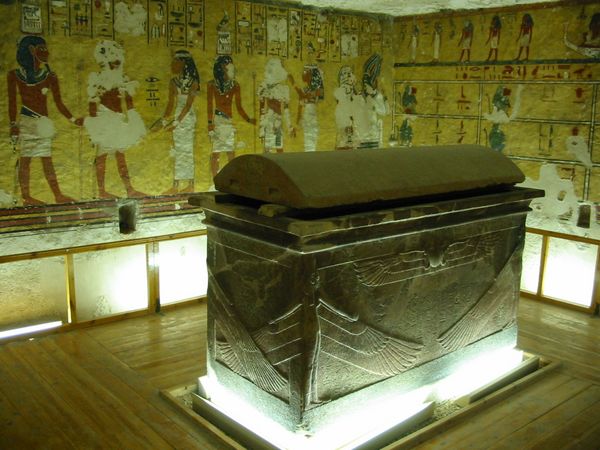
Important features of great temples and tombs were the large
scale sculptures as they were believed to be needed by the dead in the afterlife,
having spiritual qualities.

Even though they were made so many years ago, they still
impress people of present day.
Egyptians believed that people had a spiritual life force like what most people call a soul but to them it was referred to as Ka. They thought that making stone statues would prove useful in the afterlife as the soul could live in them in case the mummies get damaged and kill the life force.
Egyptians believed that people had a spiritual life force like what most people call a soul but to them it was referred to as Ka. They thought that making stone statues would prove useful in the afterlife as the soul could live in them in case the mummies get damaged and kill the life force.
Sculptures of pharaohs and other important people were done
in a formal way and made to make the royalty look godlike.

_(Room_4).jpg/150px-BM,_AES_Egyptian_Sulpture_~_Colossal_bust_of_Ramesses_II,_the_%27Younger_Memnon%27_(1250_BC)_(Room_4).jpg)
An example of such statue is the Statue of Khafre. Being 4500 years old, its
still in good condition as it was aimed to be to keep a life force safe
therefore done hollow and carved in a way that they cant get damaged easily.
Typical stance of Egyptian statues is the left foot being forward and clenched hands.
Typical stance of Egyptian statues is the left foot being forward and clenched hands.
_and_queen.jpg/131px-King_Menkaura_(Mycerinus)_and_queen.jpg)
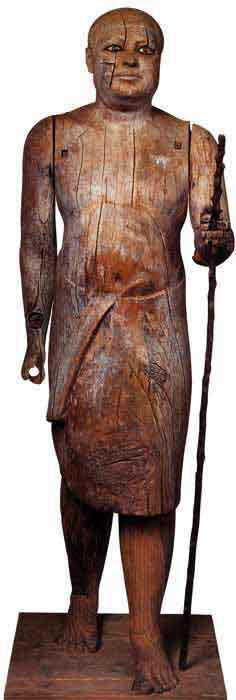
Statues were also a way of showing off their power and status.
Art of ancient Egypt - Wikipedia, the free encyclopedia. 2013. Art of ancient Egypt - Wikipedia, the free encyclopedia. [ONLINE] Available at: http://en.wikipedia.org/wiki/Art_of_ancient_Egypt. [Accessed 21 May 2013].

.jpg)